


I had an “aha!” moment recently with a friend. I was (as usual) yapping about DBT over lunch. Like a true pal, she was inquiring about its structure and how behavior change happens. I mentioned the different components of treatment and emphasized the importance of learning behavioral skills in addition to individual therapy. She was intrigued that the treatment requires something beyond talk therapy, and then it hit me: I rarely explain the significance of learning skills to people outside the therapy office.
DBT skills are central to the treatment. Learning these behavioral skills is what helps people build a life worth living.
So when I say that everyone can benefit from DBT, what I really mean is that everyone can benefit from the skills taught in DBT. My words make it sound like I want everyone to participate in individual therapy, when that’s not the case (although I would argue that most people can also benefit from therapy, but that’s not the point I’m here to make). I’ve likely confused people by using the name of the treatment as shorthand for the skills it contains.
Let me be clear: I think everyone can benefit from DBT behavioral skills that emerge from the underlying dialectical philosophy. These skills are concrete, teachable skills that anyone can practice. Marsha Linehan, the mastermind behind DBT, made sure of it. And she had a uniquely challenging group providing her feedback: people repeatedly rejected from treatment, dismissed as untreatable, and avoided by many.
I’m rereading Marsha’s memoir, Building a Life Worth Living. What strikes me is how clearly and persistently she asserts that DBT skills are life skills. She repeatedly emphasizes their applicability far beyond the population for whom they were developed. If the skills could help them, they can help anyone.
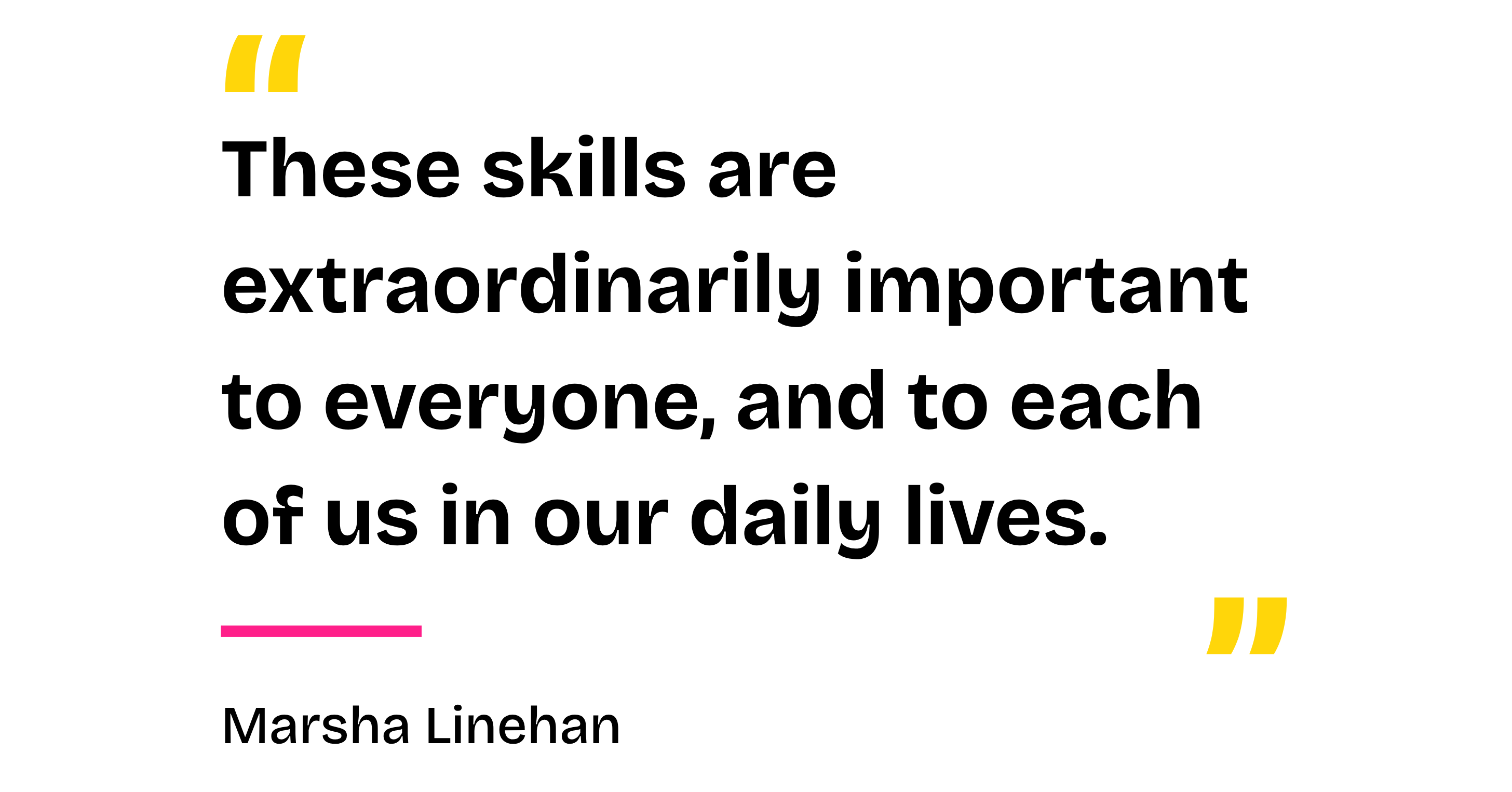
“I developed these skills in the context of treatment for severely dysfunctional people. But, these are also life skills that can help every one of us live more fulfilled and emotionally stable lives. They are the stuff of everyday life.”
On the way to lunch with the friend mentioned above, she insisted we take a certain route after I repeatedly expressed my desire to go a different way. I felt anger rise in my chest as my heart began to race and my hands started to tremble.
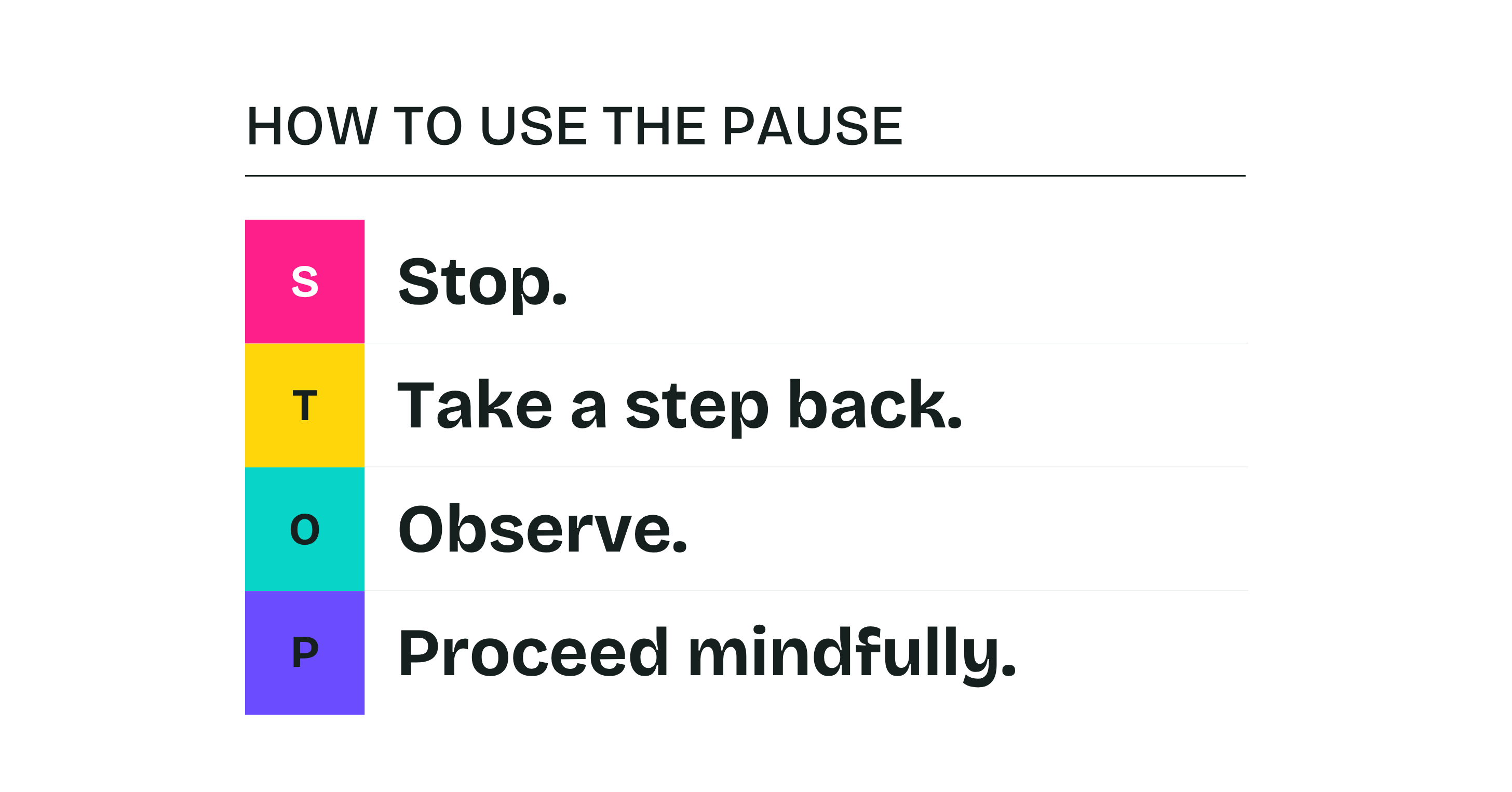
So I paused before responding and practiced STOP: Stop. Take a step back. Observe. Proceed mindfully. I told her I needed a few minutes of space. I used that time to observe what was happening for me. I thought through the pros and cons of acting on the emotion. I oriented myself back toward my value of connection. And I noticed that what set me off was ultimately unimportant in the larger context of our friendship. A few minutes later, I calmly reengaged with her.
Marsha asserts that DBT is quite literally a program of self-improvement. The skills help people live more effectively. I’m fortunate to know them and to practice them daily in my own life. Because change doesn’t come from insight alone.
“You can’t think yourself into new ways of acting. You can only act yourself into new ways of thinking.”
And action without understanding is just reaction. Effective change requires both – which is exactly what came next. In those same few minutes, I analyzed what happened and what prompted the emotion. I explored the facts without judgment – what happened earlier in the day, what I showed up with, and what her actions touched on. I allowed myself to see that my reaction made sense. And thought about how to respond more effectively next time.
During lunch, I told her what her comment set off internally, why I stepped away, and what I found underneath – my sensitivity to feeling unheard. I didn’t have to. And, letting her see the messy part, instead of just the regulated version, brought us closer.
Marsha built her model around what pushes people to the edge: shame, hopelessness, and disconnection. Her mission was to help people experiencing those states find meaning. She accomplished that by centering DBT on teaching people to be effective. To do what is needed in tough moments to keep living in line with their values.
What stands out is how universal these experiences are, especially today. The same skills that pull people back from the edge by helping them accept and regulate emotional discomfort, generate hope, and connect with others also help the rest of us move through those feelings more effectively. As Marsha says, “being effective is the key to success in all walks of life.”
Along the way, in synthesizing personal experience, scientific rigor, and contemplative wisdom, something else emerged: a coherent worldview. The therapy itself is simply the clinical application. The core assumptions include:
Reality is what it is.
Change is the only constant.
Pain is inevitable.
Suffering is influenced by context.
Behavior is modifiable.
Wisdom emerges through synthesis.
Everything is interconnected.
Biology, relationships, and environments all matter.
A life experienced as worth living can be intentionally built.
DBT was never only a treatment. Underneath the clinical application sits a philosophy of how to accept reality, embrace change, and build a life worth living. Dialectical Living is an exploration of what becomes possible when the philosophy and life skills beneath the treatment are brought into everyday life.