


I find the narrative my clients have about me quite humorous. They often assume I have my life together, I know all the answers, and I live a “perfect” life (whatever that means).
As much as I wish that were true, they couldn’t be more wrong. I’m forever a work in progress, just like everyone else.
To be fair, when I was in therapy myself prior to my graduate training, I had similar narratives about my therapists. They guided me toward more effective ways of living, so I imagined they “knew all” and easily put that into practice.
And, what I know now is that knowing is less than half the battle.
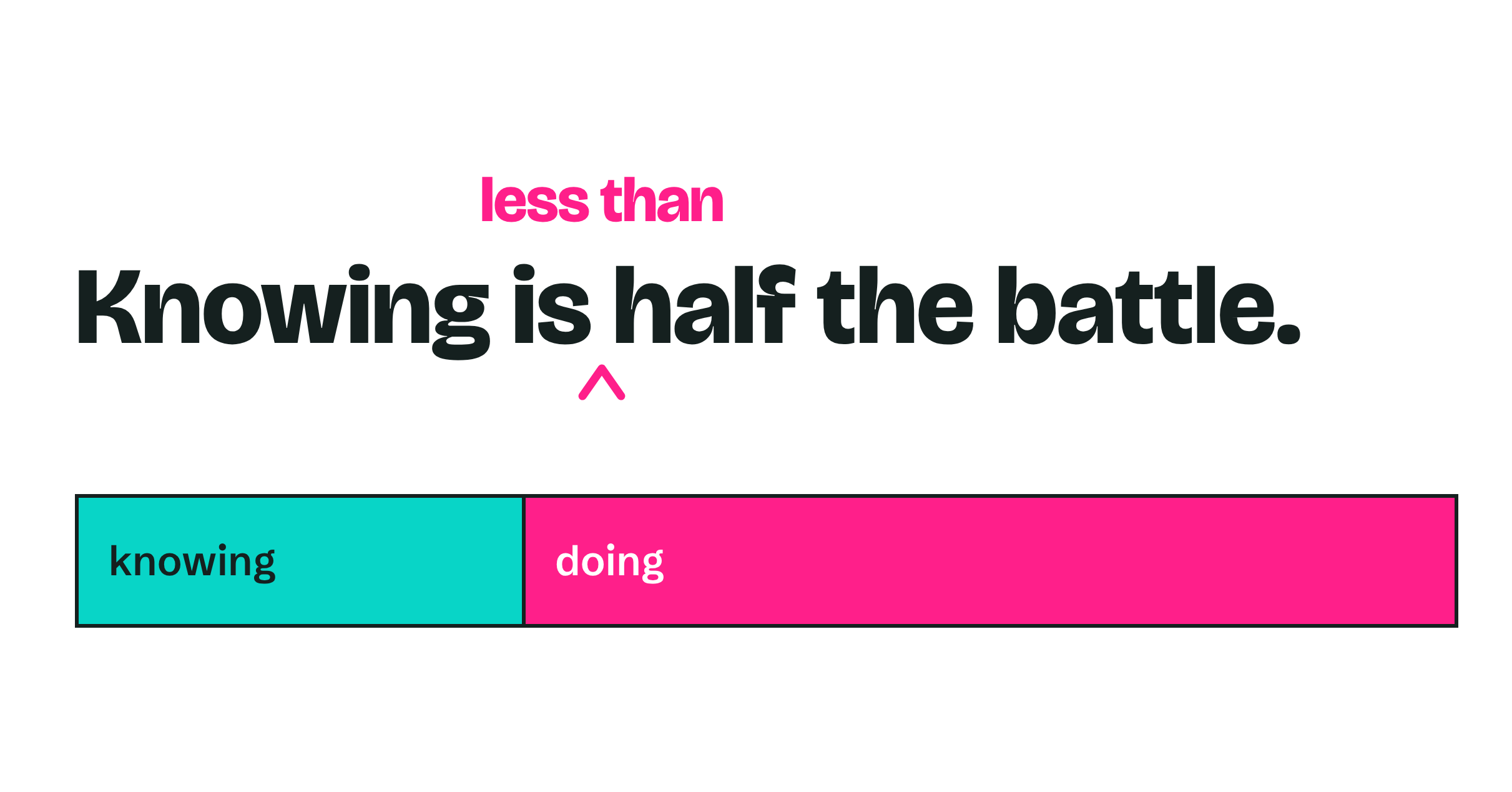
Laurie Santos calls assuming otherwise the G. I. Joe fallacy. Because knowing doesn’t necessarily change behavior.
In a recent episode of her podcast The Happiness Lab, Santos spoke with Ethan Kross, a fellow happiness researcher. They talked about how even when they know certain behaviors are effective, they often don’t enact them. They describe this as their “dark secret” and something they have to “come clean about.”
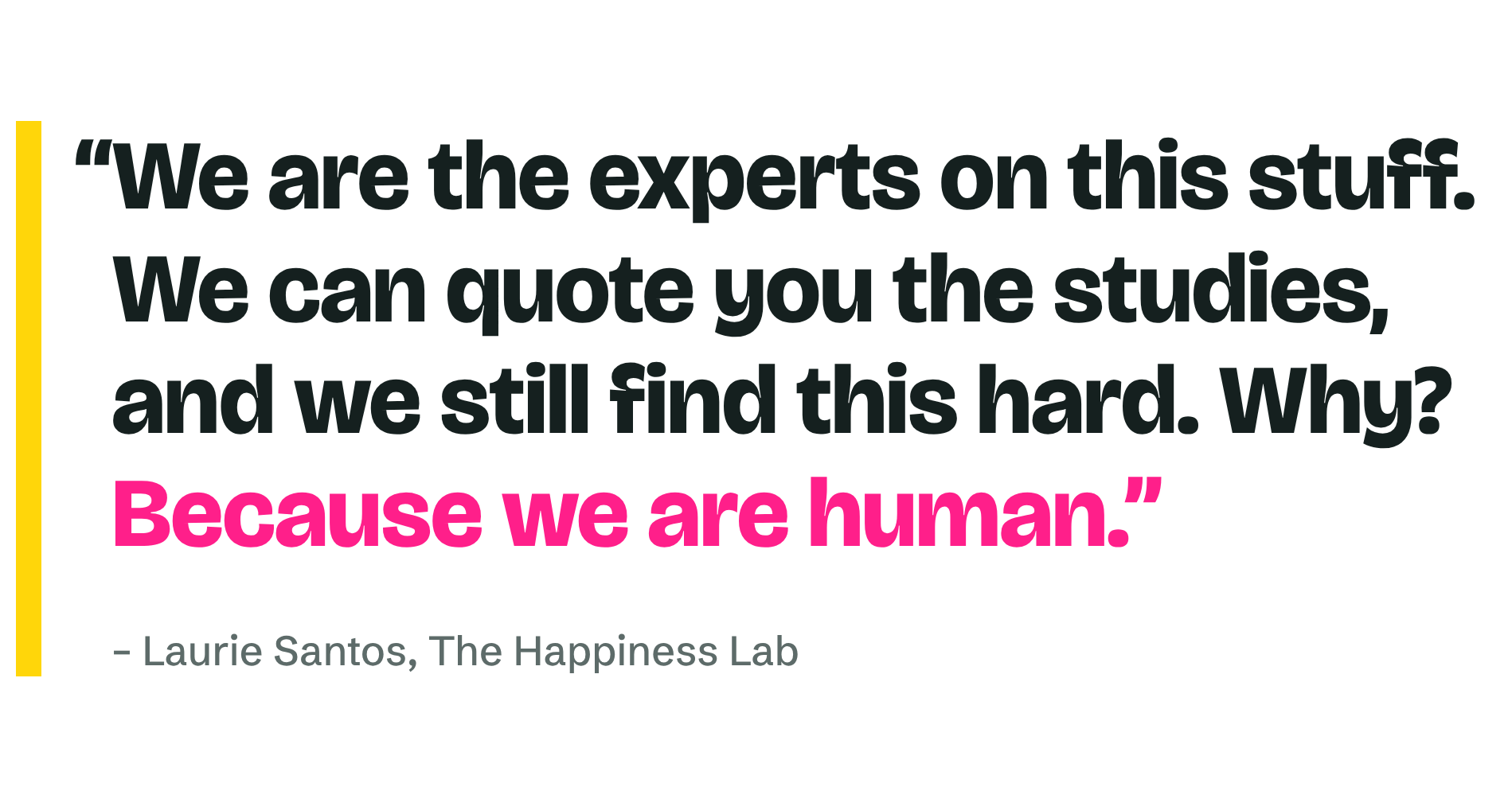
They did something my training advised against: telling people that the experts struggle too.
When I went through treatment for an eating disorder, I watched Brené Brown’s TED talk on vulnerability. I learned that vulnerability, and openness about your experience, is what creates connection.
So I put this into practice. Instead of denying my eating disorder and treatment history (as I did, and encouraged my family to do, for many years), I was open about it. I named the elephant in the room before anyone else could. I practiced opposite action to shame, for the sake of true belonging. And I felt so free.
In graduate school, I learned that this openness was unacceptable. I was explicitly told to keep my experience private. So I did. And I felt so confined.
The stigma against disclosing mental health concerns within the field is real.
Marsha Linehan, the creator of DBT, kept her own mental health struggles a secret for a long time. Something that inspired Linehan to open up about her history was the frequent question, “are you one of us?”
Early on in my work at UCSD Eating Disorders Center, someone asked me explicitly in a group whether I had experienced an eating disorder myself. I froze. My heart raced, my face turned pink, and my palms started sweating.
I knew what I wanted to say. But I said, “no.” And I felt a lot of guilt.
When the client that asked the question was discharging, I pulled her aside. I whispered that I wanted to tell the truth, and let her know that I had experienced an eating disorder. She thanked me.
A few years later at the International Conference on Eating Disorders, the then-president disclosed her own experience with an eating disorder in her opening speech. She hoped her openness would enhance integration and empathy among researchers, therapists, and those currently struggling.
I had admired her work for years. Hearing her say this felt like permission. The okay to be myself, to be vulnerable, at work.
My friend Andrew Devendorf recently posted a soon-to-be-published paper on the mental health of psychologists. The research found what we’ve both lived and experienced, yet has rarely been explored.
Around 85% of academic psychologists report experience with mental health challenges. And among those trained as therapists – it’s 92%. Therapists are not immune to the concerns they treat. They’re “only human” – and it’s normal for them to have experienced what their clients do.
In Adam Grant’s new book Vibe, he describes how he doesn’t just study connection – he also muddles his way through it. He mentions hearing that his disclosure of personal stumbles helped others feel less alone.
Having struggled ourselves doesn’t make us less competent.
Openness about our experience is a decision we can make intentionally. With clients, it’s important to consider whether our disclosure helps them.
“I honestly didn’t realize at the time that I was dealing with myself,” Linehan said. “But I suppose it’s true that I developed a therapy that provides the things I needed for so many years and never got.”
And, knowing the value of openness doesn’t make it easy to practice. I experimented slowly with when and how to share my experience. And now, the shame I feel about my own history is much smaller.
I didn’t realize how uncomfortable avoiding my truth had been.
“We must hold up a mirror, accept what we see, and commit to actions that align with our professional values of improving mental health and well-being for all people, including ourselves.” – Devendorf et al. (2026)
I wonder, if we lean into our experience, rather than avoiding it, how might we be better role models? How might we live more aligned with our values? How might we make an even greater impact?
If people see us as more similar, rather than different, might more people be willing to seek help? There’s some evidence it might.