


Intrigued by a relatable story of a marriage ending unexpectedly, I read Strangers by Belle Burden.
What stuck out is Burden’s initial shame about her marriage ending, and the fear that people would blame her and assume she was at fault. She initially hid from her community.
Over time, she challenged herself to act opposite to hiding, confront her reality, and name the facts. She said it felt like her only choice. Many people responded to her vulnerability with shock. Others validated her pain and embraced her with kindness. New connections were formed and old ones were deepened.
I know this intimately, both the desire to hide and the need to do the opposite. I felt similarly when my own marriage ended unexpectedly. I also thought I was at fault, something was wrong with me, and people would judge me.
And. I found the reverse was true (most of the time). The more people I’m vulnerable with, the more people support me, and the less ashamed and alone I feel. Experiencing intense distress can be much more tolerable with others around.
Validation isn’t something everyone knows how to do, so vulnerability won’t make everyone your best friend. It can, however, help you find the people who will sit with you in your pain, hold your hand in your shame, and stand by your side through the good times and the bad.
Vulnerability – when met with openness and without judgment – is regulating.
The more we feel that our vulnerability will be met with validation, the more we feel we can be vulnerable. Validation builds safety, and safety invites more vulnerability.
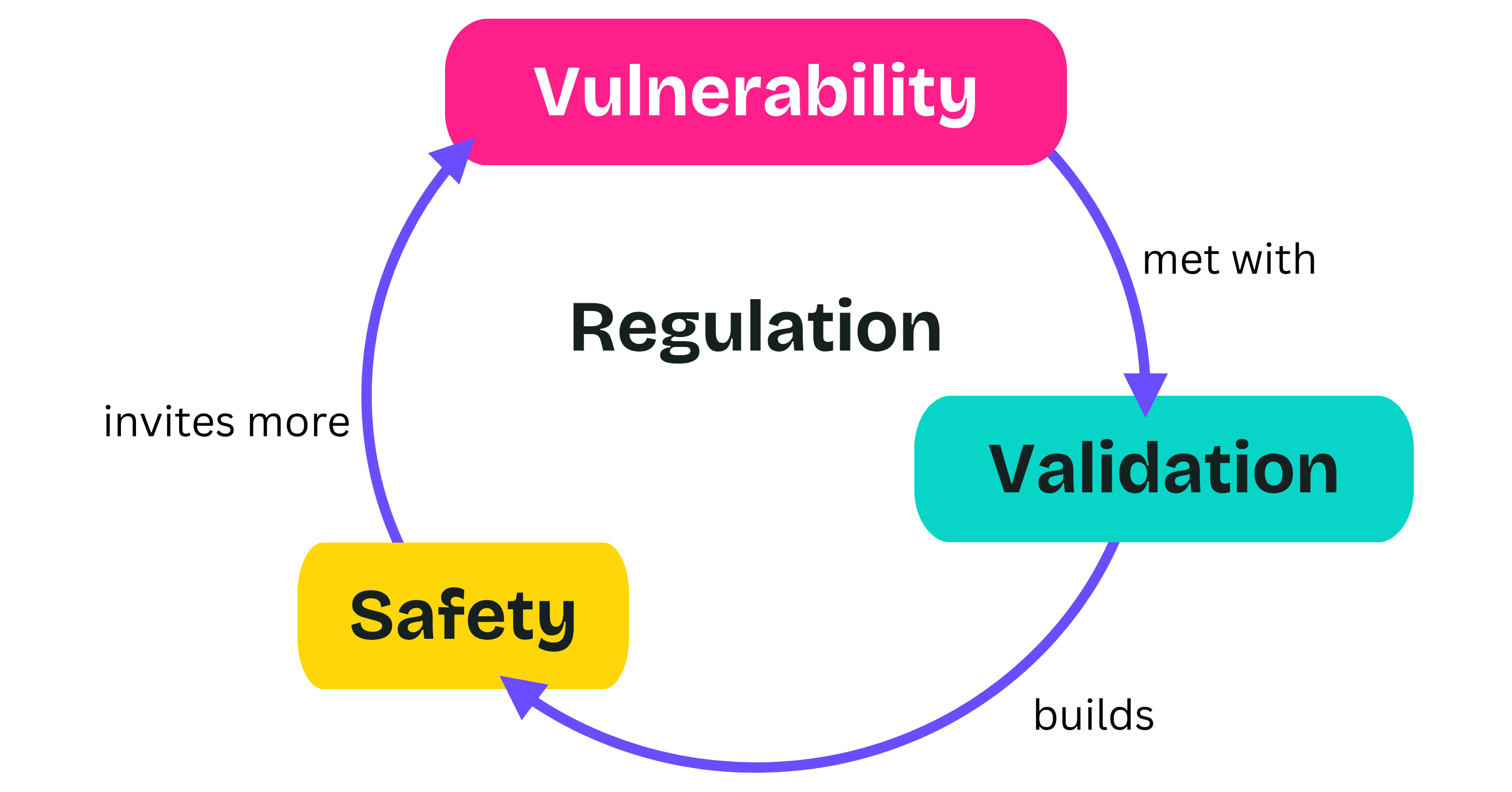
Relationships created through vulnerability can strengthen regulation capacity more than anything we do alone.
Deep, quality relationships that make us feel understood predict a good life. This is why finding a life partner is cherished, and losing one is devastating. Being known reduces the burden of managing alone.
Vulnerability isn’t only helpful outside of work. The readings for my MBA classes support the benefits of vulnerability in business, which Brené Brown has been saying for years.
One of the first books I read for my coursework was The Heart of Business by Hubert Joly, former CEO of Best Buy. He joined the company at a low point and turned it around. What did he say was the key to this success?
Vulnerability.
The best leaders acknowledge they don’t have all the answers, caring more about helping people on their team thrive than being perfect. This creates psychological safety, where partially formed ideas are welcomed and innovation follows. Joly argues that profit comes from putting people at the center.
“There can be no genuine human connection without vulnerability, and no vulnerability without imperfection.” – Hubert Joly
I’ve received feedback that my vulnerability as a leader at work is beneficial. Showing up as a normal human, rather than some polished version, opens space for others to do the same. It helps people collectively learn from what didn’t work and find what to do differently, instead of silently spiraling with shame.
As an emotionally expressive person, my face often communicates my feelings, whether I want it to or not. So when I don’t name what I’m feeling, my team tells themselves a story that they’re responsible.
Lucky for me, my team meeting happens right after my weekly therapy session, and I’m usually feeling emotionally hungover. I often want to either stay silent or word vomit, so I’m forever looking for the synthesis between them. This is the hardest part of being vulnerable as a leader, at least for me.
I’ll never perfect this, and, I’ll continue to try. The validation and gratitude my team expresses for my vulnerability reinforce tolerating the associated discomfort.
Avoidance is costly. Burden later recognized that her most authentic self stayed hidden in her marriage. She stayed small to keep her relationship. The ending opened the way to a more authentic life.
I found this as well. I kept parts of myself hidden not only to keep the relationship, but also because it was what I thought I was “supposed” to do. The unexpected, undesired, and uncomfortable ending provided an opportunity to find myself and live accordingly.
And now, in my most vulnerable and deeply connected relationship, I’ve found more space to think creatively about my values, behavioral science, and how I want to leave the world better than I found it.
In a relationship where I feel fully seen, I don’t have to spend energy hiding. That energy goes somewhere else now – into things like writing this Substack.
Vulnerability met with validation creates connection, and those relationships strengthen regulation capacity.