


Since knowing doesn’t necessarily change behavior, I find it fascinating that we spend so much time telling each other what we should do or how we should act. When our attempts at educating don’t translate into action, we frequently respond with more information.
We often know what we want to do. We want to stay present, communicate honestly, and tolerate uncertainty. Yet when emotions escalate, we often do the opposite.
Under pressure, our nervous systems crave relief. A behavior that brings relief is reinforced as a solution to distress. This makes it more likely we will do that same behavior again. Whether this behavior is consistent with our values is irrelevant to reinforcement.
This is one reason we end up behaving in ways that undermine our values. Emotions, external pressures, and reinforced behaviors can make what works in the short term conflict with what we want in the long term.
As a psychologist, I find this all rather frustrating. I can explain how to navigate the messy space between reality and dream, and I still have a hard time doing so. Hearing other experts acknowledge they struggle with this too makes me feel less alone and more willing to be vulnerable about my experience.
I recently received feedback that I can sound like a know-it-all (I do write about how to live effectively for fun…). That didn’t feel great. I noticed the urge to defend myself and relieve the discomfort. I recognized that acting on it would be inconsistent with my value of curiosity, and asked for clarification. It was uncomfortable, and, necessary for alignment.
The urge to tell people what they should do works similarly. When we care about someone, observing their growing pains can be uncomfortable (for us), and we want to help. And, just offering instructions can feel dismissive.
Being told what we already know can intensify shame without helping us practice something different. Judgment about that gap can make it harder to explore what makes change difficult.
This is why combining problem-solving with validation is helpful. Validation normalizes the challenge of putting what we know into practice when routine and seemingly automatic behavioral patterns are difficult to break. Accepting where we are makes change possible.
In my clinical work, understanding why a behavior continues helps me identify specifically how to support change. It informs what evidence-based skills might help someone act more consistently with their values.
Many of the skills that support values-aligned behavior are referred to as “soft” skills. With AI making information easier to access, strengthening these skills is essential. AI can even help us do this by outlining a hard conversation, offering different perspectives, or challenging our thinking.
And, we still need to practice what we learn when we’re feeling emotional or under pressure. Getting better at the things that make us human will keep us relevant.
I’m currently pursuing an MBA focused on executive leadership. One of my classes centers explicitly on developing these “soft” skills, which my professor identified as “more important” than the “hard” ones. Leadership is described as an inside job, so many of the same skills I teach in individual therapy are also being taught to executives working to improve their leadership effectiveness.
This class recently had a panel of past graduates speak about their experience in the program. They described how establishing mindfulness practices, engaging in self-reflection, identifying their values, and working toward alignment had radically transformed their leadership.
Their commentary reinforced the connection I’m noticing between my clinical work, leadership development, and daily life. Behavioral science provides practical skills to regulate emotions, tolerate uncertainty, and act effectively.
Some of these skills, like the ones in DBT, were developed for people with severe emotion dysregulation. If people experiencing significant mental distress can learn these skills and put them into practice to improve their well-being, I imagine many people experiencing much lower levels of distress can as well.
These skills don’t need to be reserved for people receiving psychological treatment.
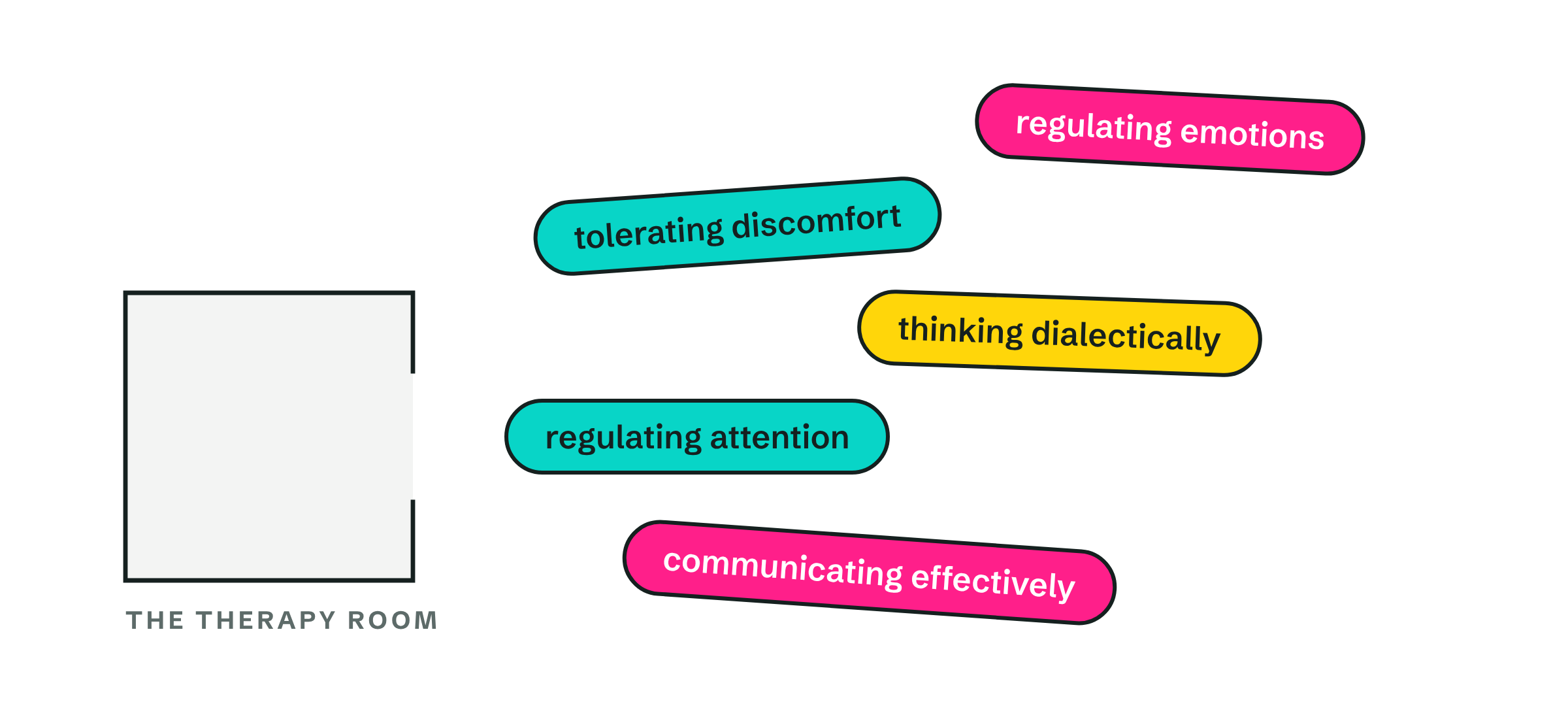
We need to build the capacity to implement what we know. Observation and reflection can help identify our seemingly automatic behavioral patterns. Practice and feedback can support values-aligned behavior in difficult situations.
This is particularly important when environments make change challenging. When workplaces say they value honesty but punish admitting mistakes, training alone won’t resolve the contradiction. They need to reinforce the behavior that reflects their stated values, helping sustain values-aligned action over time.
I wonder, what might happen if everyone had opportunities to learn, practice, and refine these skills, in environments that reinforce their use?
How might our lives, relationships, and workplaces change?
Learning skills to navigate the messy space between acceptance and change can help bridge the gap between knowing and doing.